


Welcome to the Brown History Newsletter. If you’re enjoying this labor of love, please do consider becoming a paid subscriber. Your contribution would help pay the writers and illustrators and support this weekly publication. If you like to submit a writing piece, please send me a pitch by email at brownhistory1947@gmail.com.
Don’t forget to check out our SHOP and our Podcast.

Recommended Reads:


India’s Right-Wing Raves: Hindutva, Zionism, and Psychedelic Trance
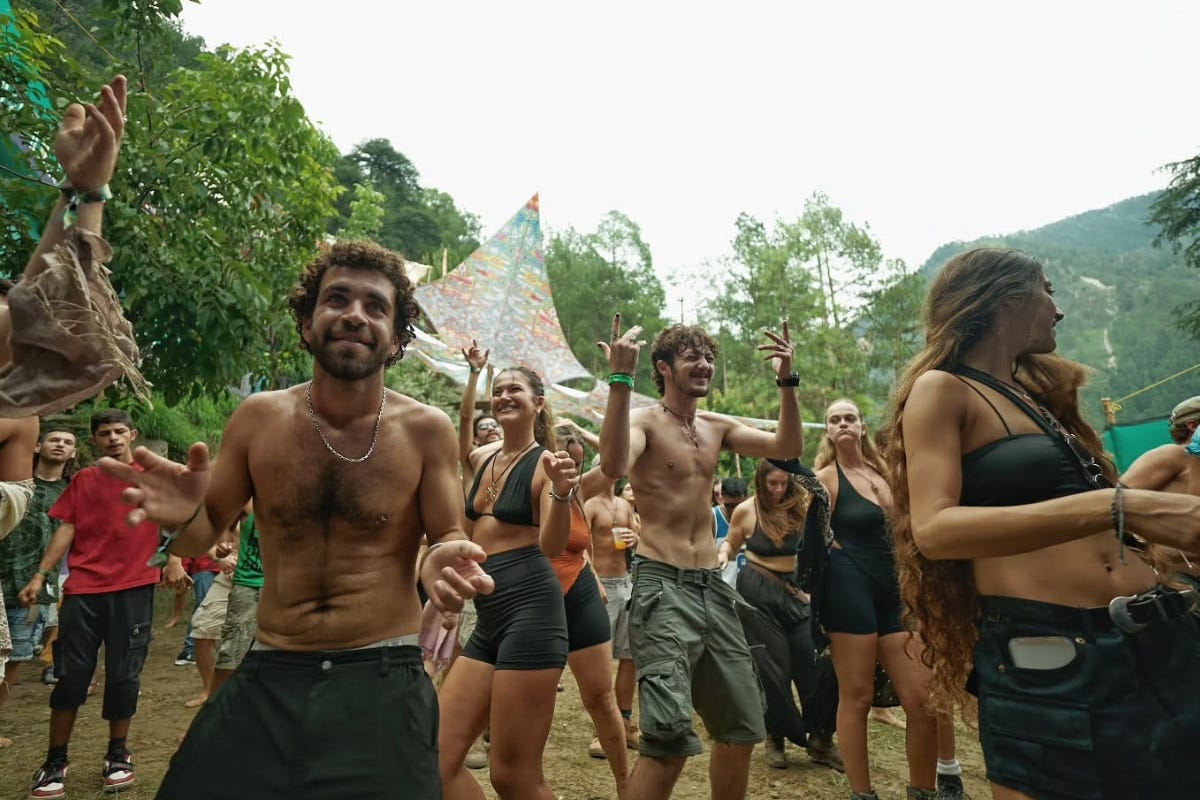
In the month of monsoon suddenly my floors and windows started to vibrate. Initially I assumed that it might be the onset of an earthquake but soon realized it was because of a religious procession outside my house on the outskirts of Delhi NCR, known as Kanwar Yatra. Filled with saffron flags and charged with boomboxes, the music blasting from these well engineered sound systems was interestingly a genre I am more or less familiar with but wouldn’t imagine it being used for a holy pilgrimage in India — psytrance. It all looked and sounded surreal.
Psychedelic trance, or psytrance was born in Goa, an Island and a former Portuguese colony approximately 600 km from the metropolitan city of Mumbai. It started from the famous hippie trail during the 60s. Goa, or India in general, became an important stop for westerners to get a whiff of Indian spirituality and a popular psychedelic: cannabis.
The production of hashish and ganja was in abundance and its easy availability due to its legal status up until the 70’s attracted the hippies to stay longer. From the beginning, psytrance was presented as anti-establishment hedonism, a sort of music that resists modern capitalist societies. Themes of religion, karma, rebirth, sci-fi, nuclear disasters, time travel, mysticism and of course drugs reverberated in the music scene, preaching the ethos of Peace, Love, Unity and Respect (or PLUR) for all humans.
However, this lifestyle, while tolerated, was not participated by the locals. Arun Saldanha in his work Psychedelic White: Goa Trance and the Viscosity of Race explains how psychedelic culture of travellers could only be enjoyed by the white middle class and was almost always impermeable for the Indians. Saldanha describes “whiteness as viscous, which means that it is neither “solid” nor “fluid”; it is frequently transgressed and sufficiently porous for all white newcomers to join, while solid enough to make it incredibly hard for Indians to penetrate.”