

When the Word Doesn't Exist: Autism, Izzat, and the Fight to Be Seen in Brown Families
Khadija Rashid traces how autism is navigated, misunderstood, and too often silenced within South Asian families, while also revealing how new language, advocacy, and community are beginning to emerge

This article is free to read because it matters. Share it, talk about it, and pass it on. Change begins when more of us are willing to see, understand, and show up for one another.
If you’re enjoying Brown History, please do consider becoming a paid subscriber. Your contribution would help pay the writers and illustrators and support this weekly publication.
If you like to submit a writing piece, please send me a pitch by email at brownhistory1947@gmail.com.
Don’t forget to check out our SHOP and our Podcast.

Recommended Reads/Listens:


When the Word Doesn’t Exist: Autism, Izzat, and the Fight to Be Seen in Brown Families
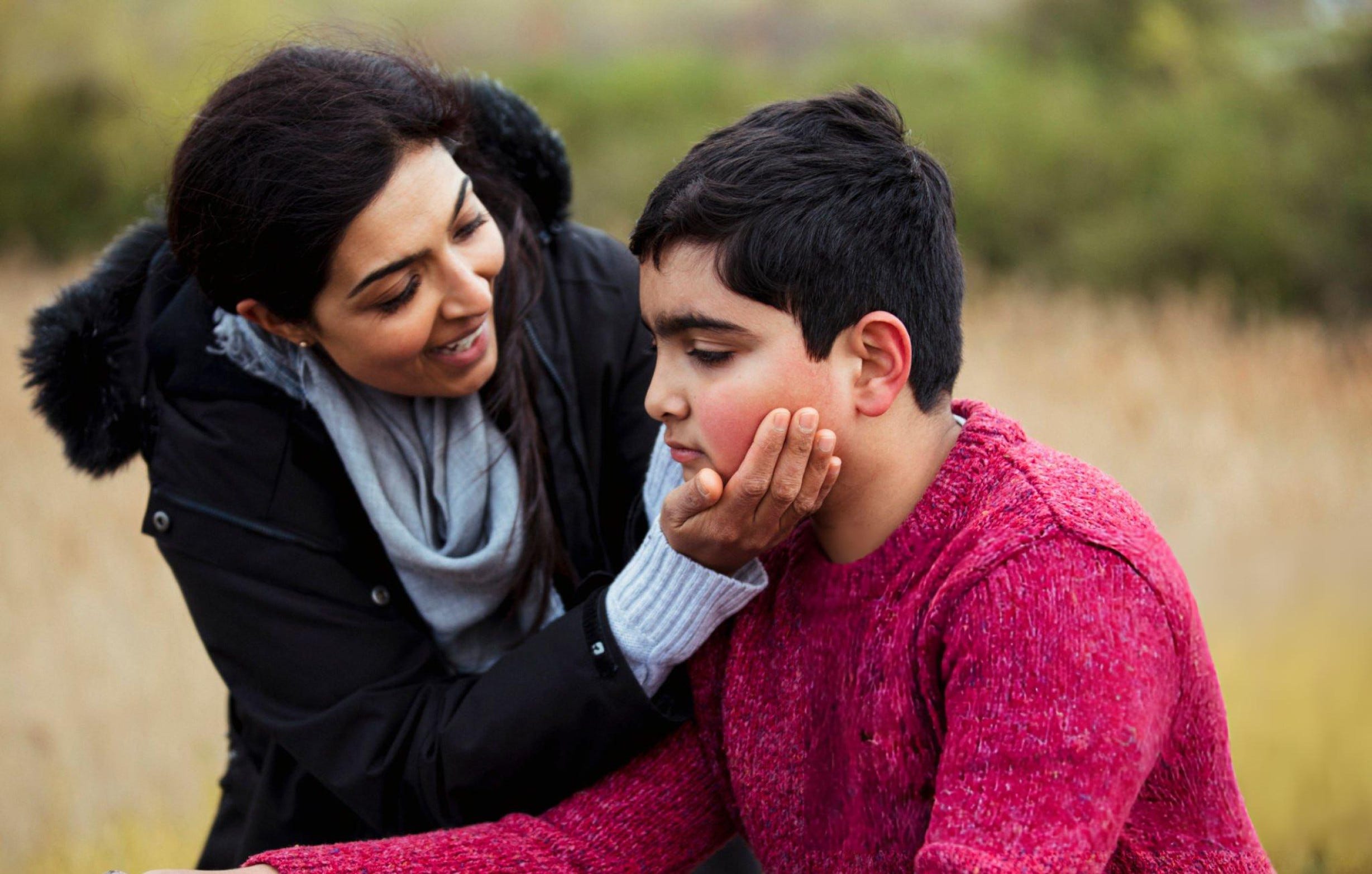
Picture a waiting room. Fluorescent lights. A clipboard with seventeen pages of intake forms, most of them written at a reading level that would lose a first-generation college student, let alone a parent who learned English on the job. A mother sits next to her seven-year-old son, smoothing her dupatta over her knees. The clinician across from her uses words like “deficit in social reciprocity” and “restricted repertoire of interests.” She nods. She signs. She goes home and cries in the bathroom, so her mother-in-law doesn’t hear.
This is not a hypothetical. This is Tuesday.
In South Asian households across the United States and abroad (Pakistan, India, Bangladesh, Sri Lanka, Nepal, etc.), autism does not arrive with a pamphlet and a referral list. It arrives through a long, quiet accumulation of things that feel wrong but have no name. At least not a name that the community has prepared anyone to say out loud. It arrives through dismissals and delays, through spiritual explanations and silenced questions, through mothers who carry a grief no one at the masjid or other religious institutions will validate because the word “autism” still sounds, to too many people, like an accusation.
Working as a Registered Behavior Technician with autistic children in New York City, I have sat with families at the exact moment the maze reveals itself when the diagnosis lands and the real work begins. Not the clinical work. The human work. Figuring out how to advocate in a system that was designed without you in mind, while holding together a family structure that may not yet have language for what is happening. This article is for those families. And it is, frankly, a reckoning with the systems that keep failing them.
“He’ll Grow Out of It”: How Brown Families Learn to Explain Away
There is, in many South Asian households, an enormous and well-intentioned infrastructure of alternative explanation. A child who doesn’t make eye contact? He’s modest, a virtue. A child who melts down at loud gatherings? She’s sensitive, like her Nani. A child who lines up his cars in perfect rows instead of playing with his cousins? He’s focused. Maybe he’ll be an engineer.
The explanations are not born from ignorance alone. They are born from love, from cultural frameworks that have genuinely served communities for generations, and from a rational fear of what happens when you stop explaining and start naming because naming has consequences.
General practitioners and family elders frequently dismiss early autism indicators. Phrases like “boys speak late” and “she’s just shy” are common, and these patterns of developmental dismissal are well-documented in the clinical literature. Research on autism in Pakistan describes how language delays are routinely attributed to upbringing rather than neurodevelopmental differences, and how this cultural framing creates critical gaps in early identification. The consequences are concrete: children miss the early intervention window that produces the most significant long-term outcomes.
For families with strong religious frameworks, there is another layer. Autism may be interpreted as nazar (the evil eye) or as the influence of jinn. It may be framed as a test of faith, a divine will that demands acceptance rather than intervention, or as a karmic consequence for the sins of a previous life. Systematic reviews of autism spectrum disorders across South Asia documents how spiritual and supernatural explanations remain prevalent across the region, functioning as meaningful barriers to clinical help-seeking. Each of these frameworks is internally coherent within its tradition. Each of them also functionally delays a child’s access to services.
And then there is the blame that lands, almost invariably, on mothers. Bhumika Shah, a child and adolescent psychiatry Fellow at Duke University, writes directly about how autism stigma in South Asian families manifests as maternal guilt. The internalized question of “did I do something wrong?” becomes a defining feature of a mother’s daily experience. Vishwani Sahai-Siddiqui, a medical professional with expertise in psychiatry, psychotherapy, and psychoanalysis, has documented how this kind of unaddressed stigma compounds over time into serious physical health consequences for caregivers who have no communal support. The mother is blamed, isolated, and then expected to be the primary driver of her child’s intervention. It is a system of impossible demands.
The Weight of Izzat: When Family Honor Becomes a Barrier to Help
Izzat (honor, reputation, or prestige) is not vanity. It is the accumulated social trust of a family: the reputation that makes marriages possible, that holds community belonging intact, that signals to the wider network that this household is stable and worthy of alliance. For immigrant families in particular, izzat functions as a form of social currency when other forms of capital are scarce. To threaten it is not trivial.
A disability diagnosis threatens izzat on multiple fronts simultaneously. In many Asian and South Asian communities, mental health conditions and developmental differences are often quietly seen as reflections of the family itself. Instead of being treated purely as medical issues, they can be interpreted as signs of weakness within the household. Because of this, many families feel pressure to manage these realities privately rather than seeking professional help. This dynamic also creates barriers in healthcare. When families avoid discussing these issues openly because of stigma or fear of community judgment, doctors and providers may misread the silence. They might assume the problem is not there or that support is not needed. In reality, the silence often reflects cultural pressure and fear of shame, not the absence of struggle.
In practice, it means secrecy. Children are kept home. Appointments, when made at all, are made quietly. Families navigate the entire journey of assessment, diagnosis, and early intervention in enforced isolation because community visibility feels too costly. Many South Asian parents describe this process as deeply lonely. Some say the fear of judgment from within their own community can feel even heavier than the diagnosis itself.
There is also the specific fear that seeking psychological support will result in the parent being labeled unstable. For immigrant parents, that fear has a sharper edge. The worry that acknowledging their child’s needs to authorities could invite institutional scrutiny, could flag them as unfit, could draw in systems they have reason to distrust. This fear is documented. It is rational, given many families’ actual relationships with governmental institutions. Various researchers have noted that the cultural reluctance to seek help is not a character flaw; it is a response to real structural conditions.
The CDC’s Autism and Developmental Disabilities Monitoring (ADDM) Network data consistently show that most Asian and Hispanic children are identified with autism significantly later than their white peers. That gap is not a mystery. It is the measurable weight of izzat, distrust, and a clinical infrastructure that has not met these families where they are. The Lancet’s regional analysis of neurodevelopmental disorders in South Asia identifies “evidence gaps and service gaps” that are themselves a form of systemic neglect, pointing to a research and policy infrastructure that has not treated these populations as a priority.
The Double Invisibility: Autistic Girls in Brown Households

If the average autistic Brown child is underdiagnosed, the autistic Brown girl is practically invisible.
The global disparity in autism identification already skews heavily male, in part because autism research has historically centered on male presentations, and in part because girls tend to mask more effectively: learning to mirror social behaviors, suppressing stimming in public, performing neurotypically at enormous personal cost. The Autistic Women and Nonbinary Network has documented how autistic girls are often praised for being “quiet” or “easy” when they are, in fact, exhausted from the performance. In South Asian households, this is compounded by cultural frameworks that already prize female quietness, compliance, and social deference. A girl who doesn’t push herself into conversations, who prefers routine, who shuts down rather than acts out. She may simply be seen as ideally behaved. She gets praised. She gets missed.
The numbers reflect this pattern. In several studies from South Asia, about three-quarters of diagnosed autism cases are boys. Researchers believe this does not mean autism is far more common in boys, but that far fewer girls are ever brought in for evaluation or diagnosis. Other research across the region has also pointed out how often girls are missing from autism studies altogether. This absence reflects a larger problem: many girls simply remain unseen, undiagnosed, and unsupported.
For girls who are identified, there is another layer of cultural response: fear. Parents become intensely protective in ways that become counterproductive, keeping daughters home from school, limiting social exposure, restricting movement out of anxiety about sexual vulnerability, and community perception. The protection becomes a cage. The girl is shielded from one set of risks and entirely cut off from the educational and social development that would build real capacity. Her needs go unmet in a different way, but they go unmet.
Brown families raising autistic daughters deserve targeted, specific support. And the community needs to reckon honestly with the fact that its protectiveness, when it takes the form of isolation, is not protection at all.
The Maze Was Not Built for You: Educational, Medical, and Legal Systems
Let’s say a family gets through all of that. They push past the community dismissals. They find language for what they’re seeing. They bring their child to a professional and receive a diagnosis. Now what?
Now they enter a second maze. And this one was built by the state.
The American system for supporting autistic children is, theoretically, robust. The Individuals with Disabilities Education Act (IDEA) guarantees every child the right to a free, appropriate public education in the “least restrictive environment” (LRE), meaning a child has a legal right to be educated alongside neurotypical peers to the maximum appropriate extent. Schools are required to conduct evaluations when a parent requests them. Individualized Education Programs (IEPs) must be developed with parental input. Independent Educational Evaluations (IEEs) can be requested at the school district’s expense if a parent disputes the school’s assessment.
In practice, immigrant families are routinely not told any of this.
IEP meetings are conducted in bureaucratic jargon that defeats even fluent English speakers. Parents navigating in a second language, without an advocate beside them, frequently leave having consented to things they didn’t fully understand. This includes placements in segregated classrooms that weren’t in their child’s best interest but were administratively convenient. Research on barriers to care for Asian Americans identifies institutional communication as a core failure point: the assumption that patients and families will self-advocate in systems built around a very specific kind of cultural capital.
On the medical side, the landscape is similarly harsh. Therapy waitlists in major cities run 12 to 18 months. Private Applied Behaviour Analysis (ABA) therapy can sometimes exceed $4,000 a month. Families who cannot afford to wait and cannot afford to pay fall into a gap that the clinical system is largely unbothered by. A survey done with South Asian parents captures this financial dimension with painful clarity. Parents use the phrase “we go through trauma” to describe not just the emotional weight of diagnosis but the specific economic trauma of trying to access services in systems not designed to accommodate them. Mothers bear the disproportionate weight of it all. Mukti Prakash Thapaliya, a researcher and practitioner, whose research on Nepali parents of autistic children documents how mothers are forced to reduce or abandon paid employment to manage caregiving and coordination demands, falling into social isolation and financial dependence as a direct result of their child’s diagnosis. This is not unique to Nepal. It is a pattern across South Asian communities globally, documented in Australia, the UK, and the United States. The labor of autism caregiving is feminized. The cost of that labor is invisible.
Cutting across all of this is the absence of cultural competence in the clinical workforce. Research on South Asian diasporic autism communities notes how families increasingly turn to platforms like TikTok to find community and information precisely because the formal medical system has failed to provide either in culturally legible forms. A clinician who doesn’t understand that “eye contact” has different cultural meanings, who reads culturally grounded deference as a clinical deficit, will produce an inaccurate picture. The field is beginning to reckon with this. It is reckoning slowly.
Finding Your Voice: Practical Advocacy for Families in the Maze
There is a shift that happens in some Brown families, not all, not easily, not without cost, where the instinct to hide gives way to the instinct to fight. Where a parent who once nodded silently in the clinic now walks into the IEP meeting with a notebook and a list of questions. This section is for that parent. And for the community members, educators, and clinicians who could be making the path less brutal.
Document Everything
Start a log, dated, specific, and behavioral. Record patterns (difficulty with transitions, specific sensory triggers, communication observations) and share them with teachers and clinicians. When you communicate in writing and request written responses from schools, you create a paper trail that matters legally. Schools tend to be more accountable on paper than in meetings.
Know the IEE: It’s the Trap Card
If you disagree with your school district’s evaluation of your child, you have the right under IDEA to request an Independent Educational Evaluation at the district’s expense. Wrightslaw.com documents this right in detail and is, without exaggeration, the most important free resource available to parents of children with disabilities in the US. Schools are not required to tell you that this right exists. You have to know how to ask. Now you do.
Bring Someone with You
To IEP meetings, to diagnostic appointments, to any situation where decisions are being made: bring another adult. An advocate, a bilingual friend, a community liaison. You are allowed to do this. Schools cannot refuse you. Having a witness changes the dynamic. Having someone who can catch what you missed, in the language, in the subtext, in the fine print, changes outcomes.
Push for Goals That Reflect Your Household
IEP goals should be set collaboratively with your active input and embedded in your family’s actual daily routines. Dey et al.’s India-based scoping exercise on autism community priorities found that families consistently prioritize functional, daily-life skills over goals that reflect clinical or academic frameworks divorced from their household realities. If clinicians are setting goals that assume a cultural context that doesn’t match yours, push back. You are allowed to say that a goal conflicts with your family’s values. You are allowed to ask for approaches that honor your child’s full context.
Use Visual and Communication Supports at Home
Picture Exchange Communication Systems (PECS), visual activity schedules, and social stories are not just clinical tools. They are techniques that parents can be trained to use effectively at home. Research consistently shows that parent-mediated strategies, where caregivers are coached to embed language stimulation into daily routines like meals and dressing, are more sustainable and accessible than clinic-only interventions. Ask your child’s therapist to train you. It is supposed to be part of the model. If it isn’t happening, ask why not.
Communities as Allies: What Mosques, Temples, and Cultural Orgs Can Actually Do
Poet and author Audre Lorde wrote that we cannot use the master’s tools to dismantle the master’s house. The institutions Brown families trust most, mosques, temples, cultural organizations, and community elders, are not in themselves the problem. But they have often, through silence and the perpetuation of stigma, been complicit in the isolation of neurodivergent families. They also, for exactly this reason, have the most power to change things. A word from an Imam carries more weight with some families than a thousand pamphlets from a clinic.
Religious and cultural leaders should participate in sensitization education that bridges their own doctrines with rights-based understandings of disability, not to abandon religious frameworks, but to help communities see that accepting and supporting a neurodivergent child is itself an act of faith and an act of community care. Hosting conversations in local languages, in familiar spaces, with counselors who can explain developmental differences without clinical jargon, demystifies the diagnosis in a way that a school brochure never will.
Practically: make spaces accessible. Quiet rooms at Eid. Sensory-friendly accommodations at religious gatherings. An explicit welcome, stated out loud rather than implied, for neurodivergent families to participate in communal life without judgment. A study on teaching autistic students in South Asia identifies the “whole-of-society” approach, communities, families, and institutions working in coordination rather than in parallel, as essential to meaningful inclusion. This is not a radical ask. It is a minimum.
Organizations doing this work that deserve amplification include SAMHIN (South Asian Mental Health Initiative and Network), which provides culturally grounded mental health resources and a provider directory; AASPIRE (Academic Autism Spectrum Partnership in Research and Education), which centers autistic adult voices and is a crucial corrective to deficit-based narratives; and The Color of Autism Foundation, which focuses specifically on Black and Brown autistic children who are chronically underserved. Internationally, Action for Autism India, Mathavam in Sri Lanka (whose work in drafting provincial autism policy is documented in Kuruppu and Padmanabhan’s country report), SWAC in Bangladesh, and the Autism Care Nepal Society, profiled in Thapaliya’s research, represent parent-led models that have built real infrastructure where government systems failed.
The Question That Stays
The mother in the waiting room eventually found her voice, not all at once. It came in fragments, over years, through a lot of crying in a lot of bathrooms. She learned what an IEP was. She learned she could push back. She found another Brown mother online who had been through it, and that connection held her together through the worst months.
But finding your voice does not make the maze disappear. It just means you can see more of it. You can see the 18-month therapy waitlist. You can see the private fee that costs more than your rent. You can see the IEP goal that was clearly written for some other child in some other kind of family. You can see how your community still can’t quite look your son directly in the eye when he’s having a hard moment at a gathering.
And underneath all of it, the question that never quite leaves: what happens to him when we are not here?
In communities where disability is still viewed through the lens of burden, where marriage is still sometimes offered as a cure, where a genetic “taint” can ripple outward and affect everyone connected to you, the path forward is genuinely uncertain and genuinely lonely for many families. Awareness is not enough. Representation is not enough. What these families need is structural change: in how clinicians are trained, in how schools communicate rights, in how community institutions show up, and in how we, as a culture, decide to talk about differences.
The voice is rising. It has been rising for years, across TikTok threads and parent support groups and mosques and temples and IEP meetings where someone finally said no, that is not good enough. The question is whether the rest of the community, the aunties, the imams, the school administrators, the clinicians, the policy makers, will rise to meet it.
Incredibly powerful article. The mention of mazes, of how Izzat is challenged when these children are brought up to light and their needs, and the fear of stigma, shame, and social rejection… are powerful factors.
Not only do they exacerbate shame, but they also exacerbate being unable to help these children the most. When we can’t help our next generation of leaders, scientists, and thinkers, we ALL collectively lose.
As a non South Asian person, this read was profound. It makes me think about how Morocco also has this deep rooted culture of shame and secrecy, and that this is universal.
Thank you so much for bring such a niche topic into light. This was incredible.
Thank you thank you thank you for writing this! As a south asian woman who has lived with debilitating anxiety to the point of suicidal ideation twice in my life, I am finally getting a diagnosis of autism in adulthood. I have masked all my life and it has slowly eroded my inner state of being. I am trying to come to terms with my own autism, and studying psychology now to continue contributing to research in autism within south asian communities to destigmatize it within our communities. This is so important and needs to be discussed in our communities with more empathy and care and less judgement.