

Why are Indian Students Protesting?
A. Patel looks at how a new generation is testing the limits of state power.

Welcome to the Brown History Newsletter. If you’re enjoying this labor of love, please do consider becoming a paid subscriber. Your contribution would help pay the writers and illustrators and support this weekly publication.
If you like to submit a writing piece, please send me a pitch by email at brownhistory1947@gmail.com.
Don’t forget to check out our SHOP and our Podcast.

Recommended Reads:


Why are Indian Students Protesting?
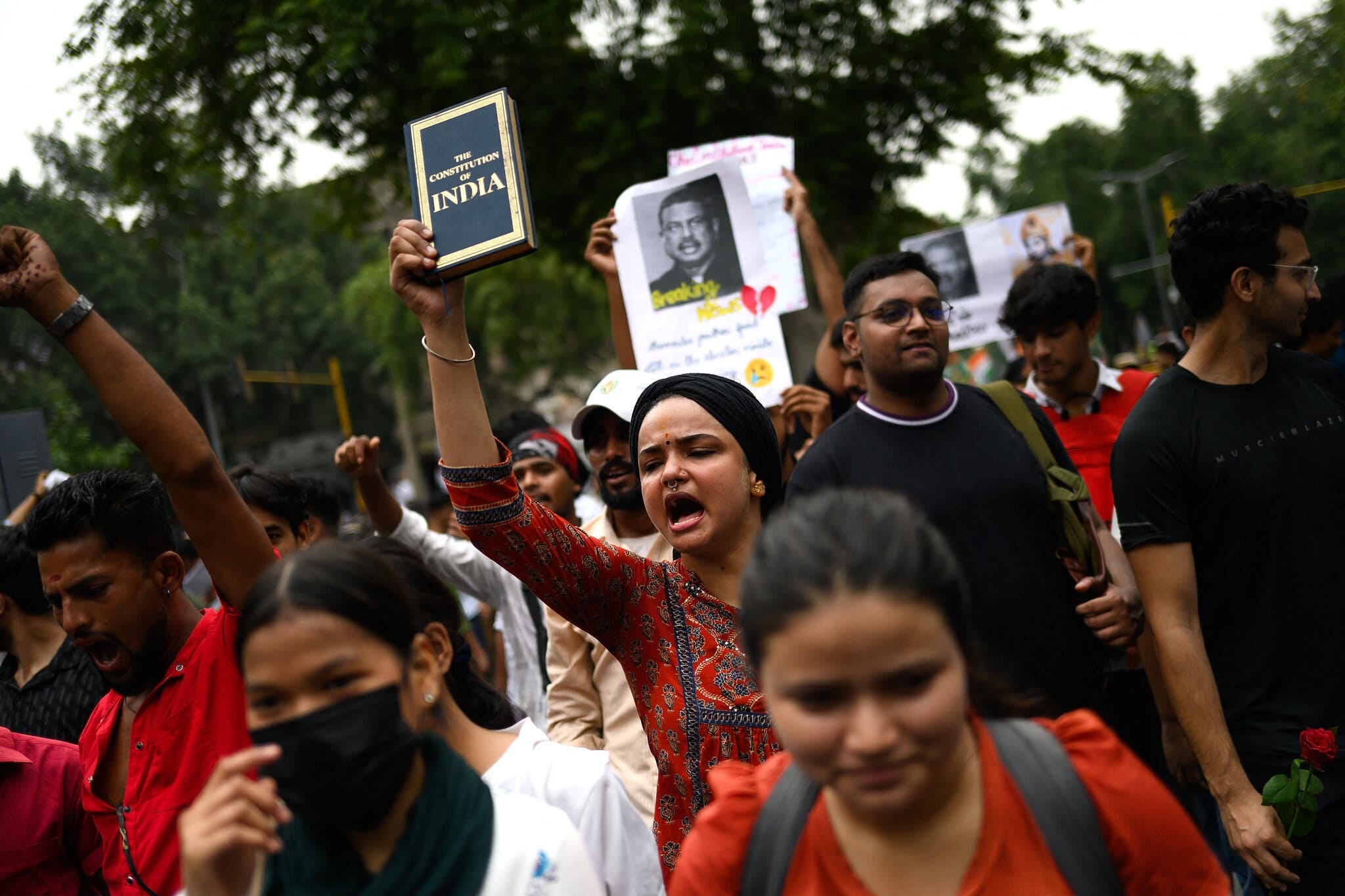
On the morning of July 20th, New Delhi, India’s capital city, woke up to rallying cries of “Chalo Sansad” – Come, March to the Parliament. An over ten thousand-strong swell of protestors gathered at Jantar Mantar, a historical observatory that serves as a site for public demonstrations, setting out to march to the Indian National Parliament. The crowd was met with armed anti-riot police, barricades welded together, and threats of violence.
The protestors refused to relent, as the state shut down the internet in parts of the city and suspended train lines that would take others to the protest. Baton charges ensued, leaving scores injured. Tear gas was deployed to disperse the crowds. Protest leaders were rounded up, and social media televised it all. This clash has not erupted overnight. It has been brewing for weeks, and is a Molotov cocktail of frustration against a system that has left young people helpless.
So, how did we get here?
It’s not a simple answer, but an overlapping maze of political and civil agendas that have given fodder to one of the most significant, intersectional protests we have seen in recent times. Untangling these threads is tough, but crucial to understanding what’s at stake for India’s youth.
An Exam Paper Leaks
At its core, the protest is about the Indian government not taking accountability for a competitive examination paper leak. The “National Eligibility cum Entrance Test” or NEET is the single, standardized entrance examination for students who want to pursue medicine in India. Each year, over two million aspirants attempt the exam, competing against each other for 180,000 seats, which are further bifurcated into seats reserved for marginalized groups, those in private and state schools, and for tribal groups. Under 3% of those appearing for the exam manage to get accepted into a government college. Families often take loans to get their children coaching for these exams, and many students spend years working towards the bleak possibility of success.
This year, over 2.7 million students appeared for the exam on the 3rd of May. However, on the 12th of May, the National Testing Agency (NTA) retroactively cancelled the examination, saying that they had found overlaps between a pre-circulated “guess paper” and the actual question paper, confirming a leak. Students clamored in distress – demanding answers, and some accountability towards the corruption that had allowed for this leak in the first place.
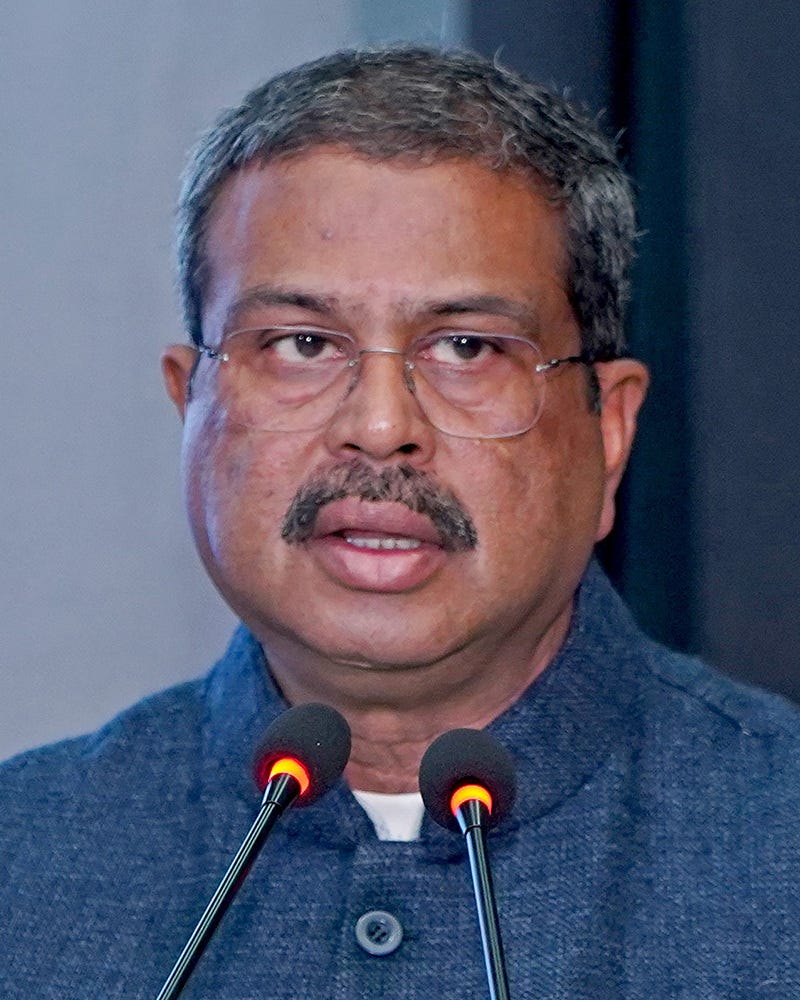
While the Education Minister Dharmendra Pradhan stated that this was a “breach in the chain of command,” no further responsibility was taken by the ministry or the body responsible for administering the exam. At the time of writing, a CBI (Central Bureau of Investigation) enquiry is in place relating to the leak, and ten accused have been arrested so far.
On the 21st of May, the first suicide related to the NEET re-examination stress was reported. Pradeep Manich, a twenty-three-year-old, took his own life in the coaching hub of Sikar, despondent that he was on his third attempt at the exam, with his family sinking deeper into debt. The exhaustion of yet another attempt at the NEET – completely out of his control – was the trigger following years of trying to succeed in a system designed to brutalize.
Once the re-examination had been conducted on 21 June, and results declared, there was further controversy that the mark sheets hadn’t been graded accurately. While the NTA dismissed these claims, this isn’t the first year this issue has surfaced. With the cancellation crisis already at hand, it exacerbated things, making an already tense situation worse.
Since then, the death toll caused by this debacle has only climbed. At the time of writing, 21 NEET-related suicides had been reported. Amongst the disheartened students and their families, a demand for the resignation of Education Minister Dharmendra Pradhan emerged, and that forms one piece of the protest puzzle.
The Cockroaches Emerge
While the NEET disaster was taking shape, another strange political movement gained ground in the country – starting as a meme, and becoming a fierce political force. On the 15th of May, the Chief Justice of India Surya Kant, remarked that young people who “don’t get any employment and don’t have any place in a profession” go on to become “cockroaches” and “parasites of society,” attacking institutions via media and RTI activism.
In a country that has seen a year-on-year growth of graduate unemployment (currently at 29.1%), this brash comment struck a nerve. The clip went viral, as young people mused on how out of touch institutional elites were. The unemployment crisis isn’t one of laziness, but one of infrastructural failure.
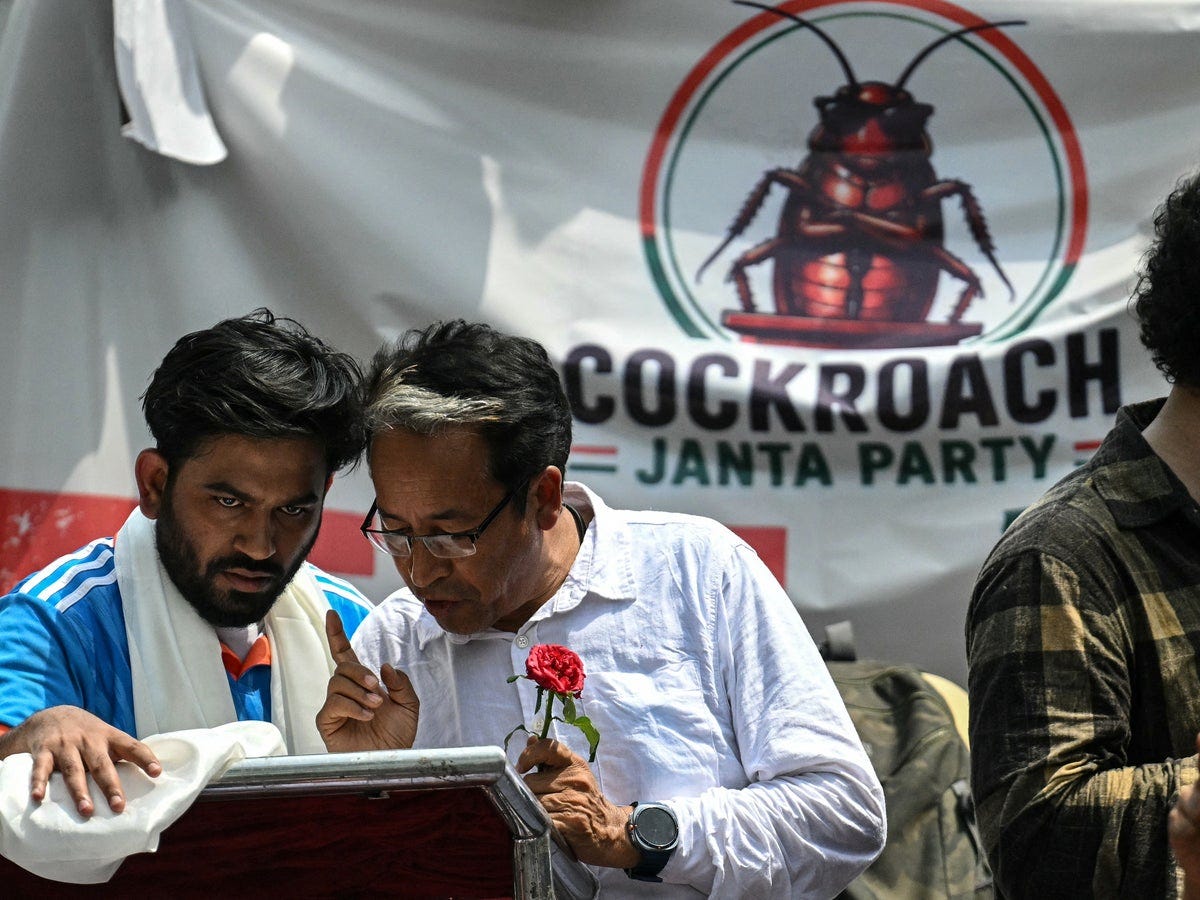
Taking advantage of this momentum, Abhijeet Dipke, a thirty-year-old political strategist, floated a Google Form with a titular graphic saying “Main Bhi Cockroach”: that is, “I am a Cockroach too.” That ballooned into the Cockroach Janta Party (CJP), a satirical play on India’s ruling Bharatiya Janata Party. The CJP’s social media following skyrocketed – crossing 10 million followers on Instagram within a week, surpassing the BJP’s 9.4 million followers. At the time of writing, the account had over 23.4 million followers.
The challenge for Dipke, a Boston University graduate who had previously designed political campaigns for Aam Aadmi Party, was to turn this momentum into actual ground-level change. The CJP organized its first protest on the 6th of June, pinning its cause to that of the NEET aspirants. The party’s spokesperson stated their demand was the Education Minister’s resignation, and that they would gather at Jantar Mantar for a peaceful, non-confrontational protest.
On the day of the protest, the turnout was mellower than expected. Despite the millions online, only hundreds showed up on the streets of Delhi. This didn’t deter the team, who instead launched a strategic mobilization across the capital – embedding itself within the existing student politics networks.
Between the 7th and 19th of June, CJP maintained a rolling protest. It ran a series of awareness drives, and actively began to collaborate with left-wing student groups such as the Students’ Federation of India, the All India Students’ Association, and the All India Students’ Federation. Propelled by this existing infrastructure, the CJP orchestrated a regroup on the 20th of June, and announced they would be occupying the site indefinitely – or rather until their demands were met.
On the day of the re-examination (June 21), Dipke issued a public appeal for aspirants to come straight to Jantar Mantar once done with the paper – managing to concretely amass support and mesh the two movements together.
Yet, this was not enough to build the momentum that would break through a month later with the attempted parliament march.
Fast and the Furious
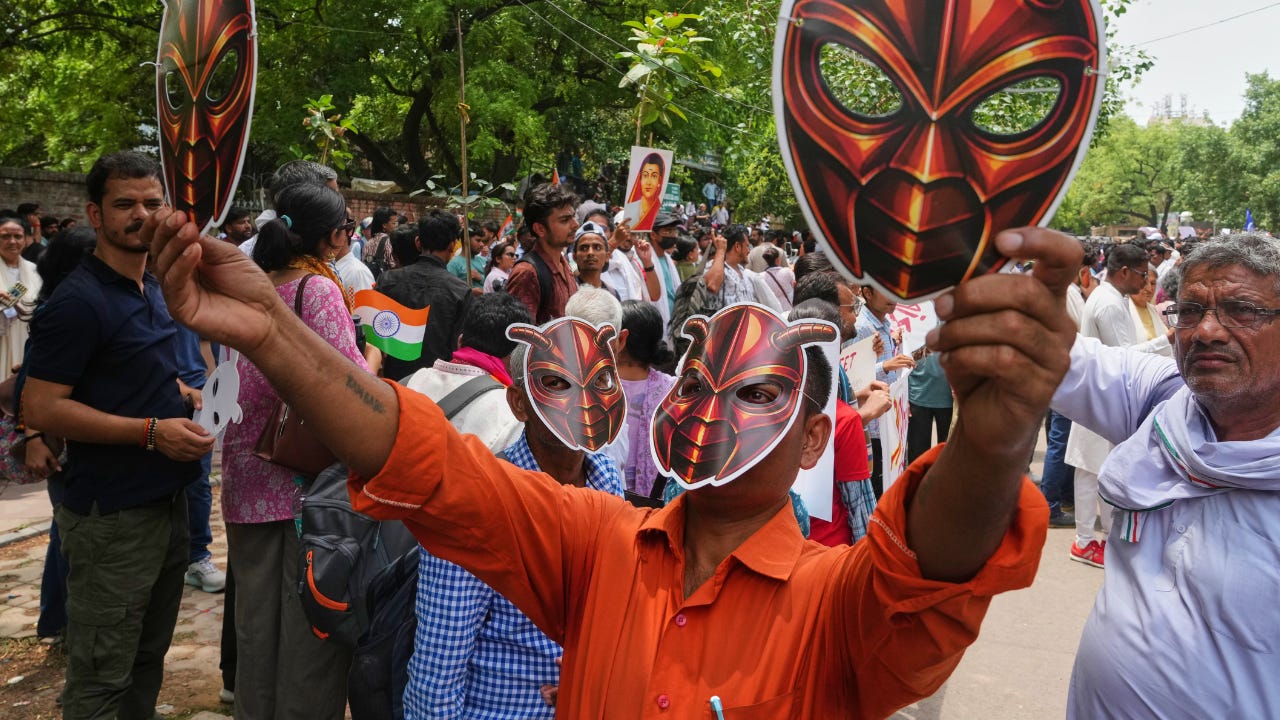
On June 28, the sit-in at Jantar Mantar gained a celebrity activist. Sonam Wangchuk, a Ladhaki engineer and educational reformer, became the face of the protest. Wangchuk, known for his popular media representation (Phunsuk Wangdu in Three Idiots), is a Magsaysay Award winner (known as Asia’s Nobel Prize) and has previously thrown his weight behind movements for Ladakhi statehood, educational reform, and environmental protection.
At Jantar Mantar, he declared that he would be going on a hunger strike till the protesters’ demands were met. Student leaders from AISA joined the indefinite fast as well. This bolstered the protest and ushered in new allies. Social media influencers and Bollywood personalities joined in with presence or solidarity posts, as the government continued to turn a deaf ear.
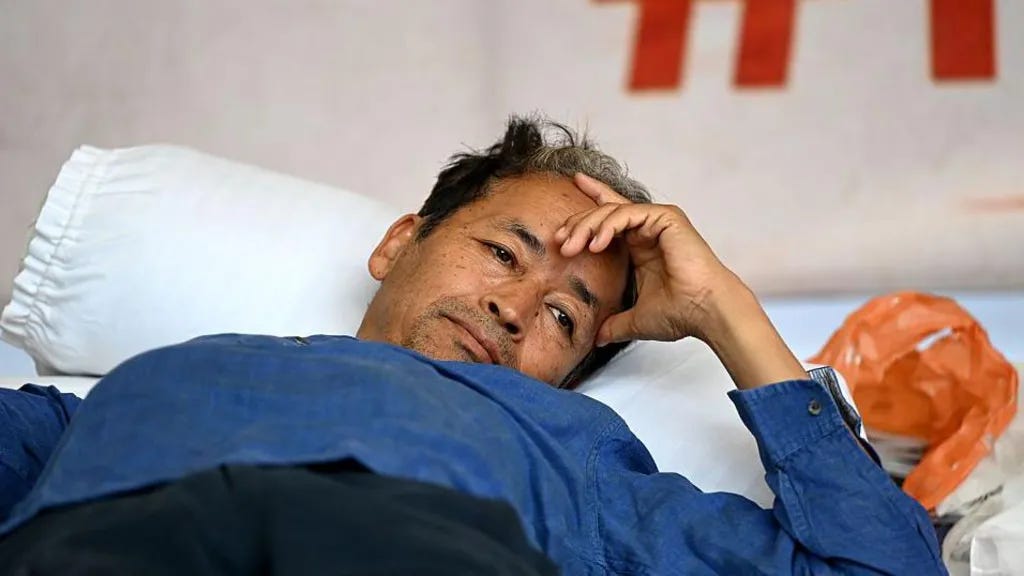
About twenty days later, in the wee hours of 18th July, Delhi Police officers from the New Delhi district were told to assemble around 3 am, initially briefed only as a “security drill”. By 7 AM, police officers surrounded the protest site and, cloaked by white sheets, took custody of Wangchuk. On the 20th day of his fast, Wangchuk was admitted to Safdarjung Hospital. The Police cited a High Court order and stated they were acting in the interest of the activist’s health.
Dipke contradicted this account and alleged that Wangchuk had been assaulted, and so had he. He went as far as to call the police right-wing “goons”. The Police continued to make public appeals, asking the crowd to disperse. The reaction, given that a video clip of Wangchuk’s removal went viral, was immediate. This time, the protest managed to bring major political voices to lend support to their cause.
Rahul Gandhi condemned the action as the Modi government using force to suppress a student-led issue it had refused to negotiate with directly. Congress president Mallikarjun Kharge, AAP’s Arvind Kejriwal, and Samajwadi Party’s Akhilesh Yadav each separately called it a tyrannical crackdown and demanded judicial oversight of how Delhi Police had handled the hospitalization. AAP’s Manish Sisodia was sharper still, framing it as the government’s actual “solution” to paper leaks: send in men to remove whoever raises their voice, rather than address the underlying exam failures.
The next day, the fight over Wangchuk’s hospitalization moved from the street into the courts.. His wife, Gitanjali Angmo, petitioned the Delhi High Court for an urgent hearing, calling his continued stay at Safdarjung “illegal detention” and saying the hospital had refused repeated requests either to discharge him or transfer him to a private facility of the family’s choosing. Judge Mini Pushkarna rejected the plea the same day, ruling that doctors had administered only oral fluids and supplements with Wangchuk’s consent and that there was no evidence force was being used against him or that his bodily autonomy was being violated.
Separately, a public interest litigation was filed the same day alleging that Delhi Police had subjected protesters at Jantar Mantar to continuous photography and surveillance, creating what the petition called an “atmosphere of intimidation” that infringed their rights to privacy and peaceful assembly; the Delhi High Court admitted it for hearing, though it remains pending.
Neither ruling had the effect the state would have hoped for. Instead of deflating the protests, it set up the grounds for the larger march to Parliament as the crowd at the protest site reportedly grew swiftly.
What Now?
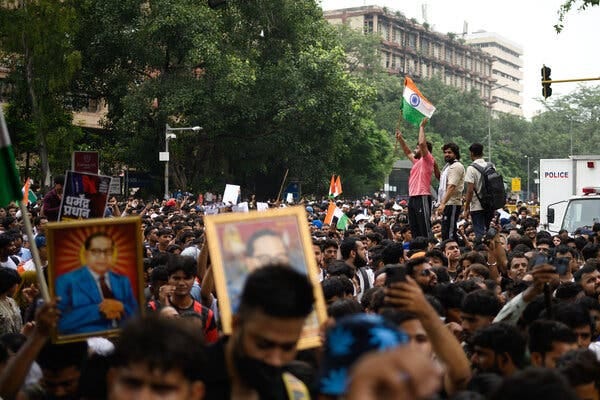
The sun has set in New Delhi, and protestors are left to make sense of a day that had no clear victors. Chaos was spurred by the use of police force and the violence that littered the two kilometer stretch between the protest site and the Parliament. The session in Parliament went on as standard, with heavy security deployment on all sides.
Yet, the protests seemed to have had a domino effect. Solidarity sit-ins have sprung up across the country. The Mumbai Police has issued a mandate banning gatherings of five or more people for the next two weeks, after thousands gathered in a march echoing the one in Delhi. Something seems to have shaken the status quo loose, and we can’t pinpoint the single pressure point that switched up what had been an under-attended sit-in to a nation-wide demonstration.
At the time of writing, a two-member delegation of the CJP had met Union Minister JP Nadda, after the government was forced to open channels of communication with the protestors. Their demands are clear: release Wangchuk, get the Education Minister to resign, and give the families of the NEET aspirants who died by suicide INR 1 crore (USD 103,671.20) each. There was no word on how these demands were being taken, and if there was any hope for reconciliation. Wangchuk maintained he was still on his fast, and was strengthened in his resolve after seeing the brutality with which the police had dealt with protestors.
In some circles, the ambition is that these protests turn into something like the Gen-Z protests of Nepal. After all, young people are the best judges of what they want their country to look like, and the ones who stand to lose most in a broken system. There can be no fortune telling on whether this will hold true. So far, the current Indian government has an abysmal record of dealing with protestors. That does not inspire optimism .
But as the chant that powers these protests go: “Hum leke rahenge azadi - Tum kuch bhi kar lo Azadi,” : We will have freedom – whatever the cost may be - we will have freedom.