

The Stolen Dead
Azania Imtiaz Khatri-Patel examines how empire extended its reach even beyond death, when hundreds of thousands of Indian bodies were taken, processed, and never returned.

Welcome to the Brown History Newsletter. If you’re enjoying this labor of love, please do consider becoming a paid subscriber. Your contribution would help pay the writers and illustrators and support this weekly publication.
If you like to submit a writing piece, please send me a pitch by email at brownhistory1947@gmail.com.
Don’t forget to check out our SHOP and our Podcast.

Recommended Reads:


The Stolen Dead
Hundreds of thousands of Indian skeletons were stolen under colonial rule. Almost none have been returned.
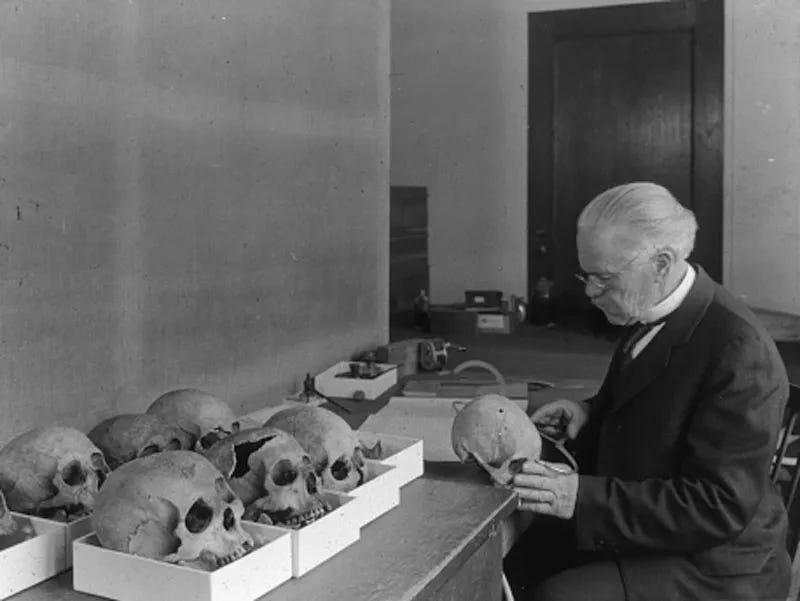
A few months ago, I stood in the Pitt Rivers Museum in Oxford, fascinated by a ‘non-display’ within the museum. Just as you enter, a poster confronts visitors with a question: “Have you come to see the ‘shrunken heads?’” It refers to ritualistically prepared human heads originating from the Amazonian Jívaro people. The poster explains that the museum no longer displays human remains, that indigenous people have the right to be buried and to remain buried. On its face, it is a gesture toward ethical reckoning.
What struck me most was a map accompanying this statement. It revealed that the Victorian-era museum holds over 250 skeletal remains and objects made from human remains, all of Indian origin. Of these, 44 objects, primarily containing cremation ashes or made with human hair, remain on display. The skeletal remains have been moved to storage. That is far from an ancestral burial. Storage, it seems, is what now passes for progress.